St. Joseph River an integral part of South Bend’s history
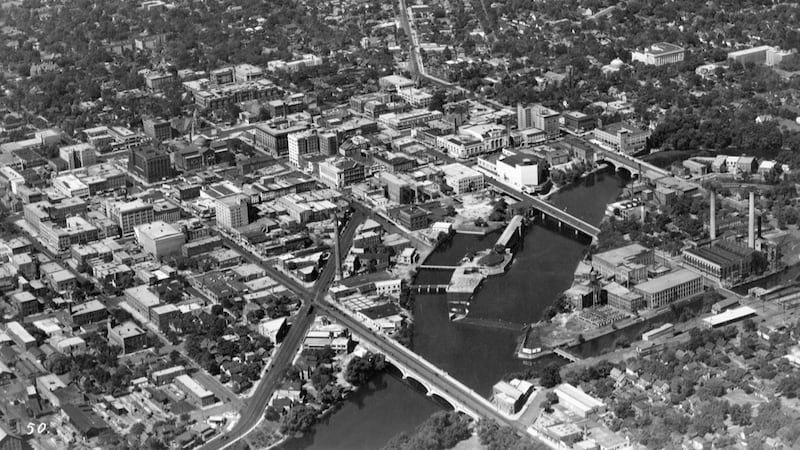
With more than 150 years of history, South Bend still bears marks of its founders. But the city would hardly be what it is now without the St. Joseph River.
“If you want to say an early interstate system going on just because, it was the shortest distance between two bodies of water,” said Travis Childs of The History Museum.
The St. Joseph River put South Bend on the map as a heavily used trade route. After 1865, the city's population and work force grew as giant companies started hanging out their shingles right on the river banks.
“The St. Joseph Ironworks Company put up a dam at the St. Joseph River Inn to harness the river power to operate machinery,” Childs explained. “South Bend soon caught onto that."
South Bend became a major economic player in the America, manufacturing a large variety of goods. Before widespread electricity, many of the companies counted on river power to keep the engines running.
“It's hard for generations now to understand what a big deal South Bend was,” Childs continued. “It was not Rust Belt. It was not Studebaker. We literally made everything from soup to nuts.”
For nearly a century, big industry meant livelihood, but the river quality took a hit. Wastewater treatment didn't exist, so the cities dumped the unwanted elements downstream.
“I wouldn't say it was turning a blind eye. I would say it was priorities,” said Notre Dame Professor Jennifer Tank. “It was a lot of it was economics. Part of it was a lack of understanding. We all thought these systems could handle it.”
Daragh Deegan is an aquatic biologist with the City of Elkhart.
“You need about five parts per million oxygen to sustain any kind of aquatic life,” he said. “Back in the 30s and 40s, it was about three parts per million.”
By the end of World War II, the St. Joe was in rough shape with almost no wildlife, hardly as bad as places like the White River in Indianapolis or even the Cuyahoga River in Cleveland.
“The river was a working river for so long, historically,” said Professor Tank. “And now the river flows through our city and we have an opportunity to look at it in a different way.”
The Studebaker brothers arrived in South Bend in 1852 to create the wagon and later automobile giant, but as blacksmiths, the river wasn't a key part of their success.
In Part Two of "Restoring the St. Joe,” we will look at how the river is currently being studied and used, and we’ll learn why scientists say the river is showing an impressive comeback.