Notre Dame students speak out about harassment for supporting Palestine
SOUTH BEND, Ind. (WNDU) - Anti-Arab racism has been on the rise here in the United States since the events taking place in Israel and Palestine on Oct. 7, according to the Council on American-Islamic Relations.
And for many, showing support for Palestinians and Arabs has led to real safety concerns in the form of harassment, assault, and death in some cases, around the country, and, unfortunately, right here at home.
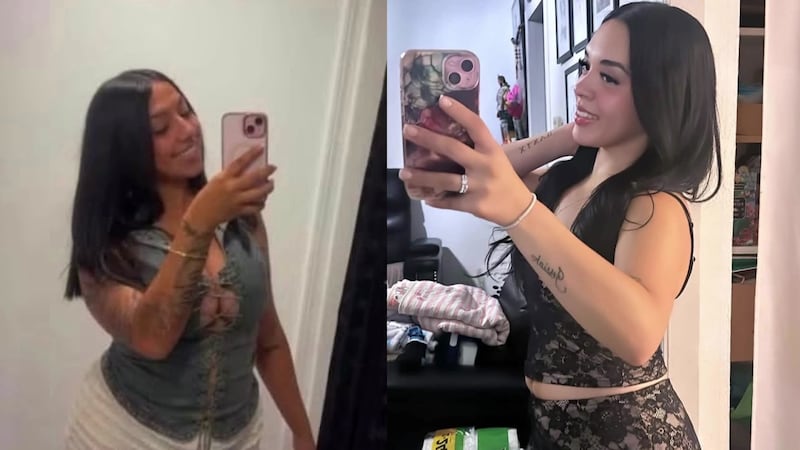
Back in October 2023, Seham Kafafi and Sarah Seto, two students from the University of Notre Dame, were harassed and spit on by another student.
It’s a moment that has stuck with them but has made them want to speak out, so this doesn’t happen again. Unfortunately, it’s not something new for Seham, who has dealt with hate speech her entire life, just because she is Arab.
“Growing up Arab, you automatically deal with discrimination,” Kafafi said. “Everyone assumes you’re a terrorist.”
But when Seham and Sarah attended a discussion panel on campus, showing support for Palestinians by wearing Keffiyehs, a traditional Palestinian scarf that is a symbol of pride, struggle, and loyalty for the Palestinian state.
They never would have expected this reaction from another student.
“He said look at what you’re wearing, and he was yelling at me at this point,” Kafafi recalled.
“He also said you guys are a bunch of dirty animals. It was very directed at the scarf, look at what you’re wearing, and he was very up in my face as well,” Seto explained.
Another student and friend of the two, also jumped in the conversation only to be verbally harassed.
“I said something along the lines of I’m Jewish and what you just did was unacceptable,” said Francesca Freeman, a student at the University of Notre Dame. “His response was to tell me that I am a supporter of baby murderers and rapists.”
The two would take the correct steps following the incident, reporting it to the Notre Dame Police Department, Title IX, and the Office of Community Standards. But the reaction was not what they thought it would be.
In response, they were brought into a Zoom meeting, which doubled as a hearing for the incident with their harasser.
Throughout the course of the meeting, the two felt the process was not done correctly.
“All the messages we got with the weaknesses within the OCS process,” Seto said. “The lack of protection lack of security, there’s so many messages that this (incident) is accepted.”
Following the meeting the harasser was given educational videos as his form of punishment. A scary thought for Seham who has seen this student multiple times on campus since and feels nothing was being done about it.
“I also asked for a no contact order, both the Notre Dame Police Department and O.C.S. did not give me a response,” Kafafi said.
And the lack of response from the university’s side has started affecting groups on campus, like Student Voices for Palestine, which holds principles of justice and truth-telling as we seek to share and emphasize Palestinian voices.
“Since they heard about what happened to me and the lack of consequences that the person faced,” Kafafi said. “They’ve been too scared to speak up because they’re afraid of getting harassed or discriminated against.”
Even with all that has happened, Seham still chooses to wear her Keffiyeh, because she will not let fear win.
“I’m scared to wear it but I still wear it... a friend of mine once told me fear is a weapon that powerful organizations use and I just try to remember that when I am scared,” she said.
When reached out to about the incident, Executive Director of Media Relations for the University, Sue Ryan told our team:
“If Notre Dame receives credible evidence of a potential violation of University student behavior policies,” said Ryan. “We will look into the matter and act in accord with those policies. When sanctions are administered, it is always with an educative purpose, to encourage students to learn from their mistakes and hopefully engage in better decision-making in the future.”
Copyright 2024 WNDU. All rights reserved.